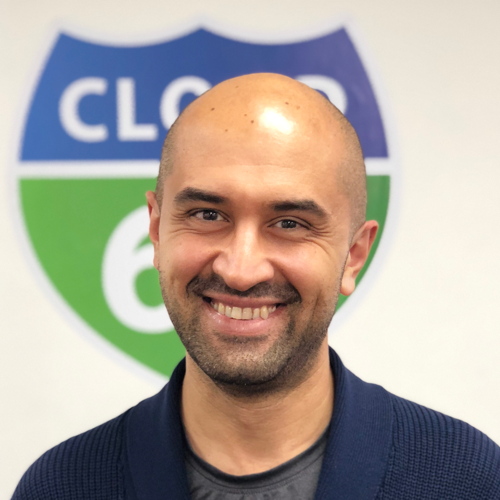
I've been in this industry since before the word "PaaS" existed. I founded Cloud 66 in 2012 — the same year Heroku was peaking, dotCloud was pivoting to become Docker, and the idea of "just git push and forget about servers" felt like the future.
It was the future. Partly. The deployment experience was revolutionary. The business model wasn't.
Last week, Heroku announced its transition to "sustaining mode" — no new features, no new enterprise contracts. But if you've been paying attention, Heroku isn't even the story anymore. It's the latest chapter in a much longer story — one that keeps repeating itself every few years, and one that nobody seems to talk about directly.
So let's talk about it. Let's look at every major PaaS provider that has shut down, been acquired and killed, pivoted away, or simply disappeared — and what it means for anyone choosing where to deploy their applications today.
The list
I've spent the past week going through every PaaS provider I could find from the past 15 years. The ones I used, the ones our customers migrated from, the ones I watched launch and quietly disappear. This is what I found.
dotCloud (2008–2016)
dotCloud was a Y Combinator-backed PaaS that let developers deploy apps in multiple languages. It was well-regarded and growing. Then the team built an internal tool to manage their own containers — and that tool turned out to be Docker.
Docker took off like nothing before it. The company pivoted entirely, renamed itself Docker Inc. in October 2013, and sold the dotCloud PaaS business to a Berlin-based company called cloudControl in August 2014.
cloudControl filed for bankruptcy in January 2016. dotCloud shut down on February 29, 2016. Customers got roughly 30 days notice and were told to migrate to Heroku.
The irony: dotCloud's own successor product (Docker) helped create the container revolution that made the old PaaS model obsolete.
Nodejitsu (2010–2015)
Nodejitsu was the original Node.js platform-as-a-service. Founded in 2010, it was deeply embedded in the Node community — the team maintained open source projects, partnered with Joyent (the Node.js sponsor), and even hosted the npm registry for a time.
In February 2015, Nodejitsu was acquired by GoDaddy and announced it would be exiting the PaaS business entirely. Customers were directed to migrate to Modulus, another Node.js hosting company.
Modulus itself was later acquired by Xervo and effectively discontinued. So developers who followed Nodejitsu's recommended migration path had to migrate again.
We wrote a migration guide at the time: Moving your Nodejitsu apps to Cloud 66.
AppFog / PHP Fog (2010–2016)
AppFog started life as PHP Fog, the first PHP-focused PaaS, launched in 2010. It quickly expanded to support multiple languages and rebranded as AppFog, attracting over 100,000 developers.
In June 2013, CenturyLink acquired AppFog and folded it into its Savvis cloud division. At the time, CenturyLink said the acquisition "ensures AppFog isn't going anywhere."
Two years later, CenturyLink announced AppFog v1 would be retired. One frustrated user wrote: "The very explicit promise of cloud hosting services is that they will forever deliver us from managing servers. And today, I hate managing servers more than ever!"
AppFog was fully shut down on August 31, 2016. Three years from acquisition to death.
Ninefold (2011–2016)
Ninefold was an Australian PaaS and IaaS provider, backed by Macquarie Telecom. It launched in 2011 as one of the first locally hosted public cloud services in Australia, offering IaaS and later pivoting to Ruby on Rails hosting.
When AWS and Microsoft Azure launched Australian data centers, Ninefold's value proposition collapsed overnight. The company announced its shutdown in November 2015, with a final operating day of January 30, 2016.
Their farewell message was honest: "Significantly more investment is required if we are to make what we've built go to the next level. After an evaluation of the underlying technical platform, much consideration and deep reflection, we have decided not to embark on this journey."
Gondor (2011–2016)
Gondor was a Django and Python-focused PaaS built by Eldarion, a company deeply connected to the Django community. It served Python developers who wanted a Heroku-like experience for their Django apps.
In May 2016, Eldarion open-sourced Gondor's technology as a Kubernetes-based project called Kel. The hosted Gondor service was discontinued. Kel itself never gained significant traction and is essentially inactive today.
HP Helion Public Cloud (2014–2016)
HP went big on cloud. They launched Helion, an OpenStack-based public cloud, in 2014 and committed over $1 billion to cloud-related initiatives. They acquired Stackato (a Cloud Foundry-based PaaS from ActiveState) in July 2015 to strengthen their developer platform offering. They acquired Eucalyptus for AWS-compatible private clouds. They were all in.
Four months after buying Stackato, HP announced Helion Public Cloud would shut down on January 31, 2016. HP's own SVP had told the New York Times that competing head-to-head with AWS "made no sense."
The Register's headline captured it well: "Both of HP Helion public cloud customers have until January 31, 2016 to find another home."
Stackato — the PaaS that ActiveState had built without a dollar of venture money, growing it organically for over three years — was absorbed into Helion and died with it.
Pagoda Box → Nanobox (2011–2021)
Pagoda Box was a PHP-focused PaaS that launched in 2011. When the traditional PaaS model started to struggle around 2015, the team built Nanobox — a "micro-PaaS" that created dev-prod parity and could deploy to any cloud provider.
In April 2019, DigitalOcean acquired Nanobox for $3.5 million, absorbing the team and technology. DigitalOcean used it to build their App Platform. Then in 2020, they announced Nanobox would reach end-of-life on March 31, 2021.
If you were a Pagoda Box customer from 2011, you migrated to Nanobox around 2016, then migrated again to DigitalOcean App Platform (or elsewhere) in 2021. Three platforms in roughly six years.
We wrote a guide for that one too: Move your applications from Nanobox to Cloud 66.
Deis (2013–2017)
Deis was an open source Heroku-like PaaS, originally built by a company called OpDemand. It was acquired by Engine Yard (itself a declining Ruby on Rails PaaS), and then acquired by Microsoft in 2017 and absorbed into Azure.
One of Deis's creators later wrote about the experience at Fermyon: "When Deis was acquired by Microsoft, it was part of EngineYard, whose valuation had dropped because of the decline of Ruby on Rails... individual technologies come and go, and the associated PaaSes follow along."
cloudControl (2009–2016)
cloudControl was a Berlin-based multi-language PaaS. They acquired dotCloud from Docker in 2014, hoping to combine the two platforms and grow. Instead, they filed for bankruptcy in January 2016 when a major customer "drastically reduced its business." Both cloudControl and dotCloud went down together.
Joyent No.de (2010–2012)
Before Nodejitsu, there was Joyent's No.de — a Node.js PaaS run by Joyent, the company that actually sponsored Node.js development. Joyent shut down No.de in November 2012 and partnered with Nodejitsu instead, saying "PaaS was outside their core business." Nodejitsu was dead three years later. Joyent's entire public cloud was EOL'd in 2019 after Samsung acquired them.
IBM Bluemix (2014–2017)
IBM launched Bluemix as a Cloud Foundry-based PaaS in 2014, part of a billion-dollar cloud push. It never gained meaningful traction against Azure and AWS. In October 2017, IBM killed the Bluemix brand entirely, folding everything into "IBM Cloud." The Register's headline: "IBM kills Bluemix, a year after killing SoftLayer."
The rest
There are more. The ones that were too small for a full writeup but that real developers relied on:
- Pivotal Web Services — Cloud Foundry commercial PaaS by Pivotal (VMware/EMC). Sunset after VMware acquired Pivotal in 2019.
- Apprenda — .NET-focused enterprise PaaS. Raised over $60M. Acquired by Atos in 2019 and effectively discontinued.
- Apcera — Enterprise PaaS backed by Ericsson. Absorbed and shut down during Ericsson's cloud restructuring.
- Flynn — Open source PaaS. Development stalled. Marked with 💀 on GitHub.
- IrisCouch — CouchDB PaaS. Acquired by Nodejitsu in 2013, merged into their platform, then died with Nodejitsu.
- Jumpstarter — Pivoted multiple times, eventually closed.
- Duostack — Early Node.js/Ruby PaaS. Quietly disappeared around 2012.
- Modulus / Xervo — Node.js PaaS. Where Nodejitsu sent its refugees. Also dead.
- Engine Yard — Ruby on Rails PaaS pioneer. Still technically exists but significantly diminished as Rails declined.
The timeline
Put them all together and the picture is stark:
2012: Joyent No.de shuts down. PHP Fog shuts down (rebrands to AppFog). Duostack disappears.
2013: IrisCouch acquired by Nodejitsu (later dead).
2015: Nodejitsu acquired by GoDaddy and killed. Ninefold announces shutdown. HP Helion announces shutdown. Jumpstarter closes.
2016: dotCloud shuts down. cloudControl goes bankrupt. Ninefold final shutdown. HP Helion final shutdown. AppFog killed by CenturyLink. Gondor open-sourced and discontinued. Stackato absorbed into dead Helion.
2017: Pagoda Box effectively dead. IBM Bluemix brand killed. Modulus discontinued. Deis absorbed by Microsoft.
2018–2019: Apprenda acquired and absorbed. Apcera shut down. Joyent public cloud EOL'd. Nanobox acquired by DigitalOcean.
2020–2021: Flynn abandoned. Pivotal Web Services sunset. Nanobox EOL'd by DigitalOcean.
2022: Heroku kills its free tier.
2026: Heroku enters sustaining mode.
That's over 25 platforms in 14 years. Not obscure experiments — real services that real developers deployed real production applications on.
The pattern
Every single one of these follows a variation of the same story:
- A PaaS launches. Developers love the simplicity.
- Apps get deployed. Dependencies form. Teams build workflows around the platform.
- Something changes. An acquisition. A funding crunch. A strategic pivot. A bigger competitor launches locally.
- The platform announces it's shutting down, or "transitioning," or being "absorbed."
- Developers get 30 to 90 days to migrate their production applications somewhere else.
And then they pick a new PaaS, and the cycle starts again.
Some developers went through this twice. PHP Fog became AppFog, got acquired by CenturyLink, got killed. Pagoda Box became Nanobox, got acquired by DigitalOcean, got killed. Nodejitsu told its users to go to Modulus — which also shut down. Stackato was acquired by HP and folded into Helion — which HP killed four months later.
The fortrabbit blog captured the mood in their 2015 PaaS industry review: "2015 has NOT been a good year for the PaaS scene. No newcomers, lot's of exits and pivots."
That was a decade ago. The exits haven't stopped.
The structural problem
It's tempting to look at this list and say "these companies just weren't good enough." But that's not what happened. Nodejitsu was the Node.js community's PaaS. Gondor was the Django community's PaaS. Ninefold was Australia's PaaS. HP Helion had a billion dollars behind it. These weren't amateurs.
The problem is structural. The traditional PaaS model has a fundamental tension at its core: the platform runs your code on its infrastructure, which means your application only exists because the platform exists. When the platform stops — for any reason — your application stops.
This isn't a risk you can mitigate by choosing the "right" PaaS. It's a consequence of the model. The PaaS owns the runtime. You don't.
And the business dynamics make it worse. PaaS providers are caught between two pricing pressures: they have to be cheap enough that developers don't just rent a VPS and do it themselves, but expensive enough to cover the massive overhead of building and maintaining a global deployment platform. Most can't sustain this. The ones that survive tend to be backed by companies with other revenue streams — Heroku by Salesforce, App Engine by Google, Elastic Beanstalk by AWS. And even Salesforce eventually decided it wasn't worth it.
There's another way
I founded Cloud 66 in 2012 — the same year that several of the platforms on this list were at their peak. We watched the PaaS landscape from the inside and made a deliberate architectural decision: we would never host our customers' applications.
Cloud 66 deploys and manages your application on servers that belong to you, in your own cloud account — AWS, Google Cloud, Hetzner, DigitalOcean, Azure, Vultr, or your own hardware. We handle the deployment, the configuration, the scaling, the security, the databases, the backups. But the servers are yours. The cloud account is yours. The data is yours.
If Cloud 66 disappeared tomorrow, your servers would keep running. Your databases would keep serving queries. Your load balancers would keep routing traffic. Your customers wouldn't notice a thing. You'd lose the management layer — the dashboards, the automated deployments, the monitoring — but your infrastructure would be intact. You could SSH in and manage it manually, or bring in another tool.
That's not true of any traditional PaaS. When Heroku goes away, your dynos go away. When dotCloud went away, apps went away. When Ninefold went away, servers went away. The application and the platform are coupled.
We decoupled them on purpose.
Make this the last migration
If you're reading this because Heroku just moved to sustaining mode, I understand the frustration. You chose a platform, you built on it, you trusted it, and now you're being told to plan your exit. Again.
Before you pick the next PaaS — Render, Railway, Fly.io, whoever — ask yourself one question: what happens when that platform hits its own sustaining mode? Because if the last 14 years have taught us anything, it's that they all do, eventually.
The only way to break the cycle is to own your infrastructure. Not to manage bare metal yourself — that's going backwards. But to use a tool that gives you the deployment simplicity of a PaaS while putting the servers in your hands.
That's what we built. We've been doing it since 2012. We're profitable, we're backed by Dell Ventures, and we have no interest in pivoting, getting acqui-hired, or sunsetting anything. Every time a PaaS dies, some of those developers find their way to us. We'd rather they find us before the next one dies.
Try Cloud 66 for free. Deploy your first app in minutes. And stop migrating.
I'm Khash Sajadi, founder and CEO of Cloud 66. If you have questions about migrating from Heroku or any other platform, reach out — we've been helping developers do this for over a decade.